Tag: Board Game Design

  • From Armored Core 6 to Asteroid Wars: How Classic Mech Games Inspired My Sci-Fi Board Game

    Creating this board game has been one of the most exciting projects I’ve ever worked on — and it’s a game deeply shaped by the things I love most about sci-fi and tabletop gaming.
    Fast-Paced Mech Battles and Custom Loadouts

    One of my biggest inspirations was Armoured Core 6. I was hooked by its fast-paced, high-intensity battles, where split-second decisions and precise movements decide everything. But what really stuck with me was the satisfying, almost meditative process of building the perfect loadout in the garage before battle. Tweaking your mech, adjusting weapons, testing different builds — that feeling of preparation is something I wanted to capture in my game.

    Tactical Depth from Classic Games

    I also drew a lot of influence from BattleTech, with its deep sense of tactical action and strategic thinking. Every move, every terrain advantage, and every choice of weapon matters in BattleTech, and I knew I wanted my board game to have that same thoughtful, tense decision-making baked into every encounter.

    The Weight and Glory of Big Battles

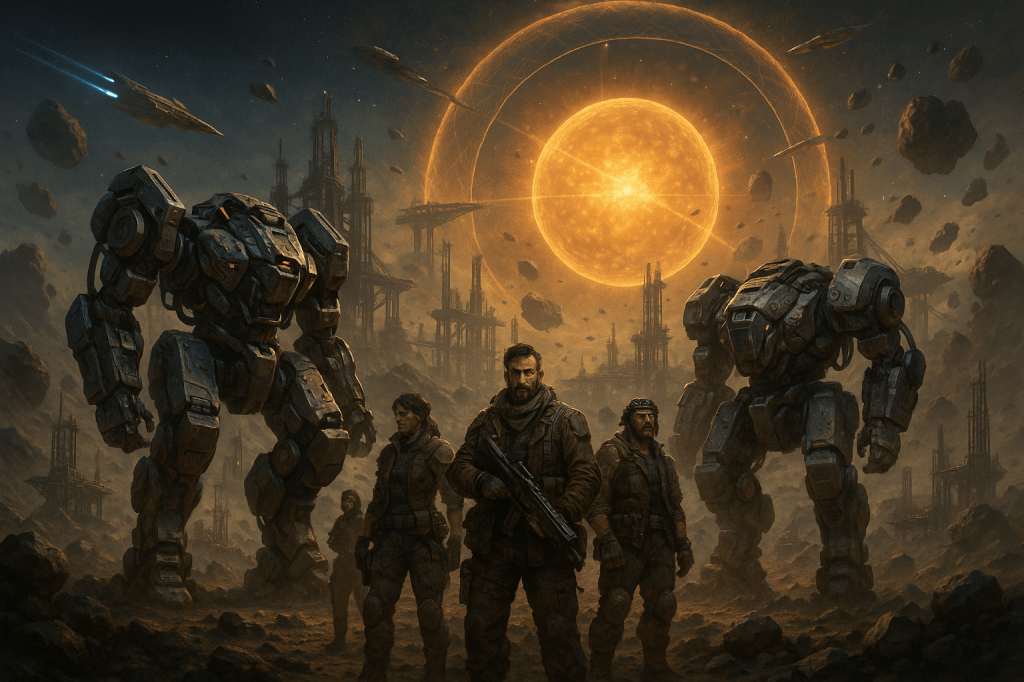
    Of course, I’ve always loved Warhammer, especially the feeling of massive, lumbering units clashing in chaotic, unpredictable battles. That visual of giant mechs and monsters slogging it out on dusty asteroid fields, huge gothic battlefields, or abandoned space stations became a huge part of the combat vibe in my game. I also loved the idea that even the good guys were still bad in some way in the grim dark future!

    A Sci-Fi World on the Brink

    The story itself came together through a collection of smaller ideas. I’ve always been fascinated by dystopian futures, but I wanted to do something a little different. Instead of a world already fully controlled by mega-corporations, my setting is caught in a constant power struggle.

    In this future:

    • The impoverished colonies of the asteroid belts fight to survive.
    • The Terran government and military try to maintain order from their powerful inner-orbit strongholds.
    • Massive mega-corporations battle over the rich mineral fields of the outer orbits.
    • And above them all, the construction of a Dyson Sphere looms — a symbol of both humanity’s greatest achievement and the terrifying possibility of one faction gaining control over everything.

    To add a little extra spice, I introduced a Guild Faction — a rogue trading network operating in the shadows, moving between the cracks of the major powers, and offering unpredictable opportunities to mercenaries and traders alike.

    Final Thoughts

    This game is a blend of everything I love about science fiction — the speed, the strategy, the tension of battle, and the complexity of a world always on the edge of collapse. It’s been an awesome journey so far, and I’m excited to keep bringing this universe to life.
  • Building Battlesuits and Worlds: What I’ve Learned Designing My Sci-Fi Board Game

    For the past few months, I’ve been working on designing my own science fiction board game, and it’s been an amazing (and sometimes challenging) experience. In this post, I want to share a little about the process and what I’ve learned along the way.

    Creating a Sci-Fi Universe

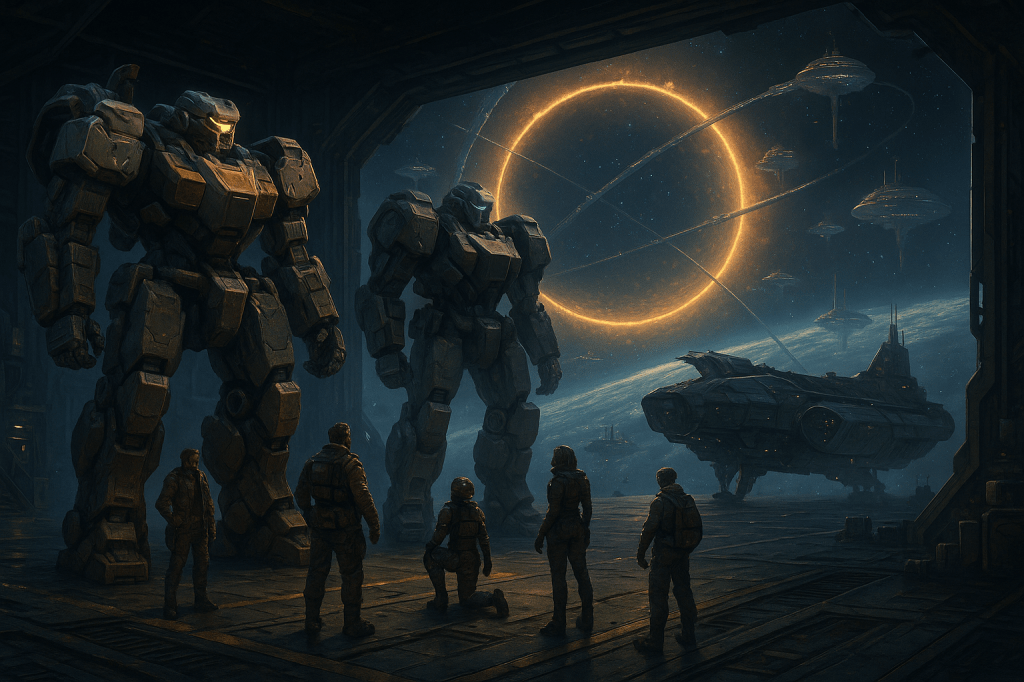
    The first step was building the world where my game takes place. I was deeply inspired by Armoured Core 6, and Battletech. I wanted a world that was fast-paced like AC6, but tactical like Battletech. Building the world I imagined a future in the year 3500 AD, where humanity has left Earth and started building a Dyson sphere around the Sun. Colonies on Mars, the Moon, and the asteroid belt have created a wild, lawless frontier filled with pirates, corporations, and mercenaries. This setting gave my game a unique, gritty sci-fi feel, and having a strong story made designing everything else much easier. My goal was to have multiple factions with reasons for each faction to want to both work together, but also against each other. I had been watching a heap of Gundam, and I love how they play off between the good people, both being good and bad.

    Learning to Balance Fun and Strategy

    One of the biggest things I’ve learned is how important it is to balance fun and strategy. I wanted the game to feel exciting, with fast-paced battles using giant battlesuits (mechs), but I also wanted players to make smart tactical choices. Playtesting has been key. Every time I test the game, I learn something new about what works and what doesn’t. I also wanted games to feel fast-paced, but still filled with strategy. A key part of the game is building your battlesuits, similar to how you spend hours in AC6 or Battletech, or even Warhammer in that case, creating your units and ensuring you have tuned your army. I wanted the games to be fast enough that you could refine and play again within the same session!

    Working with Artists and Creators

    Another great part of this project has been connecting with other creators. I recently started looking for a 3D artist to design some models for the game, and it’s taught me a lot about communicating ideas clearly and respecting different styles. Seeing other people bring parts of my vision to life is one of the most rewarding parts of this process.

    Final Thoughts

    Designing a board game takes a lot of work, creativity, and patience — but it’s so worth it. I’ve learned that it’s okay to make mistakes, test new ideas, and ask for feedback. Every step brings the game closer to the vision I had when I first started.

    If you’re thinking about creating your own tabletop or board game, my advice is: start small, build your world, and don’t be afraid to test and improve.