For the past few months, I’ve been working on designing my own science fiction board game, and it’s been an amazing (and sometimes challenging) experience. In this post, I want to share a little about the process and what I’ve learned along the way.
Creating a Sci-Fi Universe
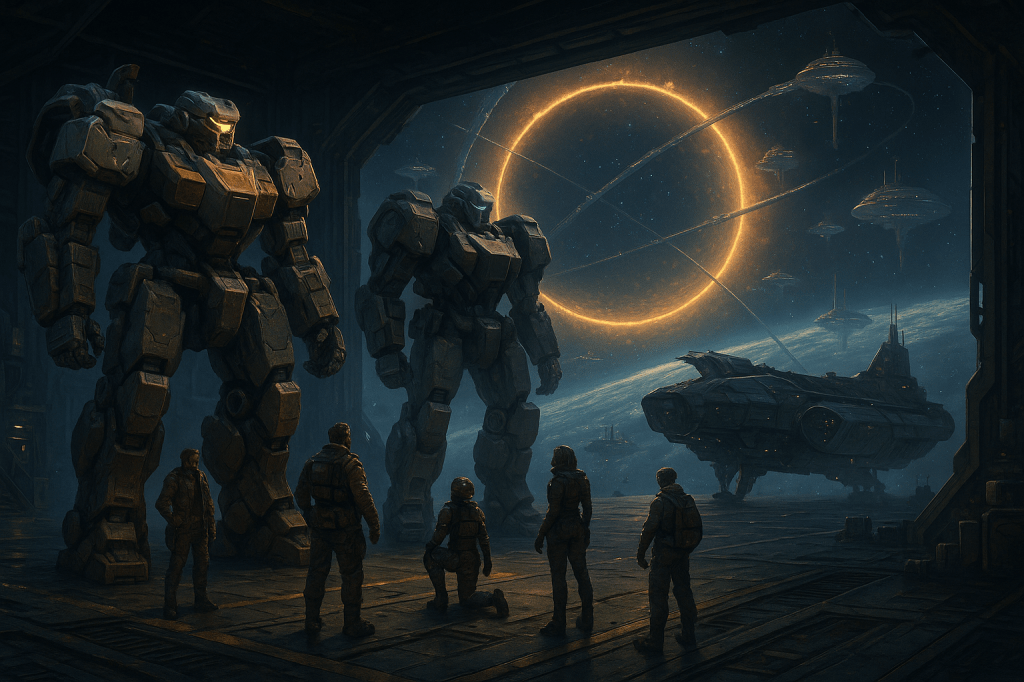
The first step was building the world where my game takes place. I was deeply inspired by Armoured Core 6, and Battletech. I wanted a world that was fast-paced like AC6, but tactical like Battletech. Building the world I imagined a future in the year 3500 AD, where humanity has left Earth and started building a Dyson sphere around the Sun. Colonies on Mars, the Moon, and the asteroid belt have created a wild, lawless frontier filled with pirates, corporations, and mercenaries. This setting gave my game a unique, gritty sci-fi feel, and having a strong story made designing everything else much easier. My goal was to have multiple factions with reasons for each faction to want to both work together, but also against each other. I had been watching a heap of Gundam, and I love how they play off between the good people, both being good and bad.
Learning to Balance Fun and Strategy
One of the biggest things I’ve learned is how important it is to balance fun and strategy. I wanted the game to feel exciting, with fast-paced battles using giant battlesuits (mechs), but I also wanted players to make smart tactical choices. Playtesting has been key. Every time I test the game, I learn something new about what works and what doesn’t. I also wanted games to feel fast-paced, but still filled with strategy. A key part of the game is building your battlesuits, similar to how you spend hours in AC6 or Battletech, or even Warhammer in that case, creating your units and ensuring you have tuned your army. I wanted the games to be fast enough that you could refine and play again within the same session!
Working with Artists and Creators
Another great part of this project has been connecting with other creators. I recently started looking for a 3D artist to design some models for the game, and it’s taught me a lot about communicating ideas clearly and respecting different styles. Seeing other people bring parts of my vision to life is one of the most rewarding parts of this process.
Final Thoughts
Designing a board game takes a lot of work, creativity, and patience — but it’s so worth it. I’ve learned that it’s okay to make mistakes, test new ideas, and ask for feedback. Every step brings the game closer to the vision I had when I first started.
If you’re thinking about creating your own tabletop or board game, my advice is: start small, build your world, and don’t be afraid to test and improve.
 Iron Horizon: Mercenaries